How Many Security Cameras Does Your Houston Home Actually Need?
Skip the magic number. Learn how to size camera coverage for Houston-area homes by entry points, sight lines, and how you actually use your property.
If you are shopping for home security cameras in the Houston area, you have probably seen packages that promise a fixed count—four cameras, six cameras, eight cameras—as if every house needs the same layout. Real homes do not work that way. A patio home in Midtown, a two-story in Katy, and a corner lot in The Woodlands each present different sight lines, landscaping, and ways people approach the property.
A better question than “how many cameras?” is “what do I need to see clearly?” Coverage beats camera count. When you plan around driveways, doors, yards, and side gates—and treat a video doorbell as part of front-entry coverage—you end up with a system that feels useful every day, not just a row of devices on a quote.
Start with how people approach your home
Walk your property the way a guest, delivery driver, or stranger would. In many Houston neighborhoods, the first contact point is the driveway or front curb, then the porch or front door. Side yards and gates often sit out of casual view from the street. Backyards may open to a shared fence, a greenbelt, or an alley. Those paths are your camera map.
Note where vehicles park, where packages land, and where kids or pets go in and out. Also note glare and shade. Houston sun is strong; late-afternoon light on a west-facing garage or porch can wash out a poorly aimed camera. Planning for angle and height matters as much as adding another lens.
Coverage zones that matter more than a magic number
Most residential plans fall into a handful of zones. You may not need a dedicated camera for every zone, but you should decide intentionally for each one.
Driveway and curb appeal: A driveway-facing camera helps you see who pulls up, when cars arrive and leave, and what happens near the garage. On wider lots common outside the Loop, one wide view may still leave blind spots near the sidewalk or a second bay—so placement and field of view matter more than simply “adding one for the driveway.”
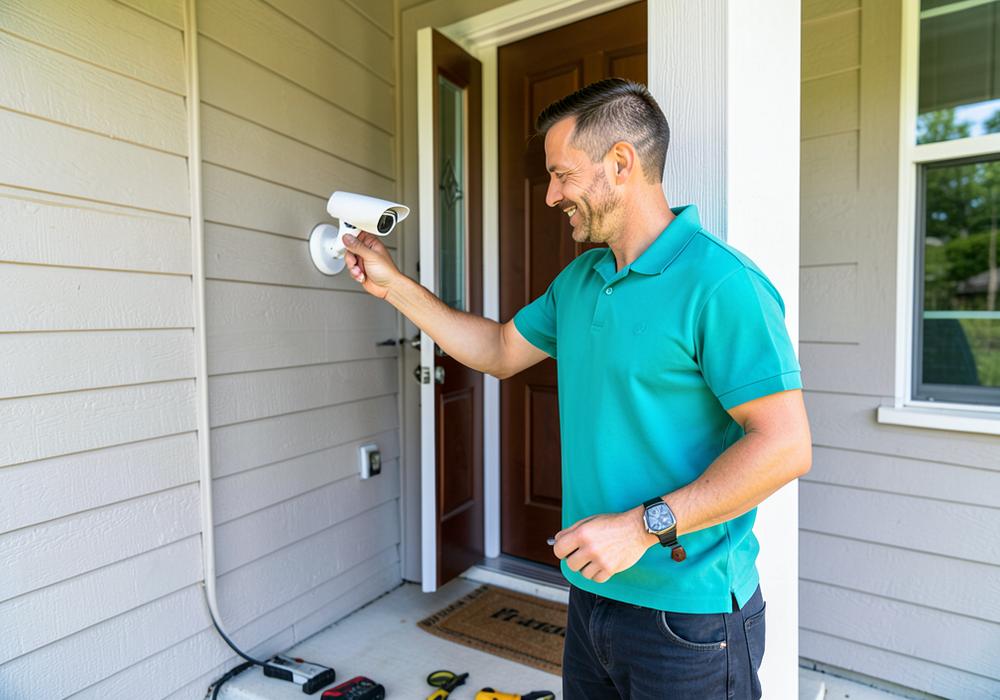
Front door and porch: This is where packages, visitors, and face-to-face interactions happen. A dedicated porch camera can work, but many Houston homeowners cover this zone with a video doorbell first. A doorbell gives you a close, conversation-ready view of whoever is at the door, with two-way talk from your phone. Outdoor cameras still help for wider porch or walkway context; the doorbell handles the “who is right here” moment.
Side gates and narrow paths: Side yards and gates are easy to overlook because you rarely stand there yourself. If someone can move from the street to the backyard without crossing the front porch, that path deserves attention. A single well-aimed camera covering a gate and the run beside the house often prevents a gap that street-facing cameras never catch.
Backyard and outdoor living space: Patios, pools, outdoor kitchens, and play areas are part of daily life in Houston’s long warm season. A backyard camera is less about a fixed “requirement” and more about whether you want visibility when you are inside, traveling, or checking on kids and pets. Large or L-shaped yards may need more than one angle to avoid fences, sheds, or landscaping blocking the view.
Where video doorbells fit in an entry plan
Think of a video doorbell as entry coverage, not a substitute for whole-property surveillance. It excels at the front door: clear visitor identification, package awareness, and quick remote answers when you are at work or in another room. Pairing a doorbell with one or two exterior cameras that watch the driveway and a side or rear approach is a common, practical layout for many single-family homes.
If your home has a secondary entrance—a side door to the garage, a mudroom off the driveway, or a gate that guests use for backyard gatherings—decide whether that door needs its own close-up view or whether a wider outdoor camera already covers it. Doorbells shine at conversation distance; outdoor cameras shine at context and motion across a yard or driveway.
A practical way to size your system
Instead of starting with a product bundle, sketch a simple coverage checklist. Mark each approach you care about, then ask whether an existing camera or doorbell already covers it clearly. Only then decide what to add.
- List every approach path: curb/driveway, front door, side gates, backyard access, and any garage or alley entry.
- Stand at each path and note what you cannot see from the street or a neighbor’s line of sight—those are priority camera spots.
- Assign the front door to a video doorbell unless you already have a strong porch camera you prefer to keep.
- Prefer fewer cameras with clean, overlapping views over more cameras that all point at the same porch.
- Check night performance and Wi-Fi or wired options early—Houston homes with thick walls, metal roofs, or busy mesh networks can affect wireless cameras.
- Plan recording and remote viewing so the system is easy to check on your phone when you are away.
After that exercise, some compact homes land on a doorbell plus two outdoor cameras. Larger lots, corner properties, or homes with busy rear access often need additional angles. Townhomes and patio homes may prioritize the front entry and a limited side or rear view. The “right” number is the smallest set that removes your important blind spots without creating clutter or duplicate views.
Houston-area details worth planning for
Local housing stock varies: older bungalows inside the Loop, newer builds in master-planned communities, and properties with mature trees that shade yards but also create night-time challenges for cameras. Storm season and occasional outages are another reason to think about power and network resilience for cameras and recorders—not because every home needs a complex setup, but because a camera that goes dark with the Wi-Fi is less useful when you want it most.
HOA guidelines, brick and stucco exteriors, and preferred cable routes also affect where cameras can mount cleanly. A professional walkthrough helps match coverage goals to what your structure and network can support, so you are not guessing from a generic online kit.
First Choice Smart Solutions installs surveillance and video doorbell systems for Houston-area homes with an emphasis on clear coverage and reliable viewing—not selling a one-size camera count. If you want a layout that matches your driveway, doors, gates, and yard, a site-specific plan is the fastest way to get there.